
Views: 0 Author: Site Editor Publish Time: 2026-08-20 Origin: Site


SPC flooring can remain in service for many years when the product is properly selected, installed and maintained.
For a homeowner, choosing the wrong flooring may mean an inconvenient replacement. For a flooring distributor or project buyer, the consequences can be considerably larger: broken click joints during installation, unexpected claims, replacement materials and damage to customer confidence.
This is why buyers frequently ask one question when sourcing SPC flooring:
Is this SPC made with virgin PVC or recycled PVC?
There is plenty of advice online about how to tell the difference. Unfortunately, some of the most commonly repeated methods are not as reliable as they appear.
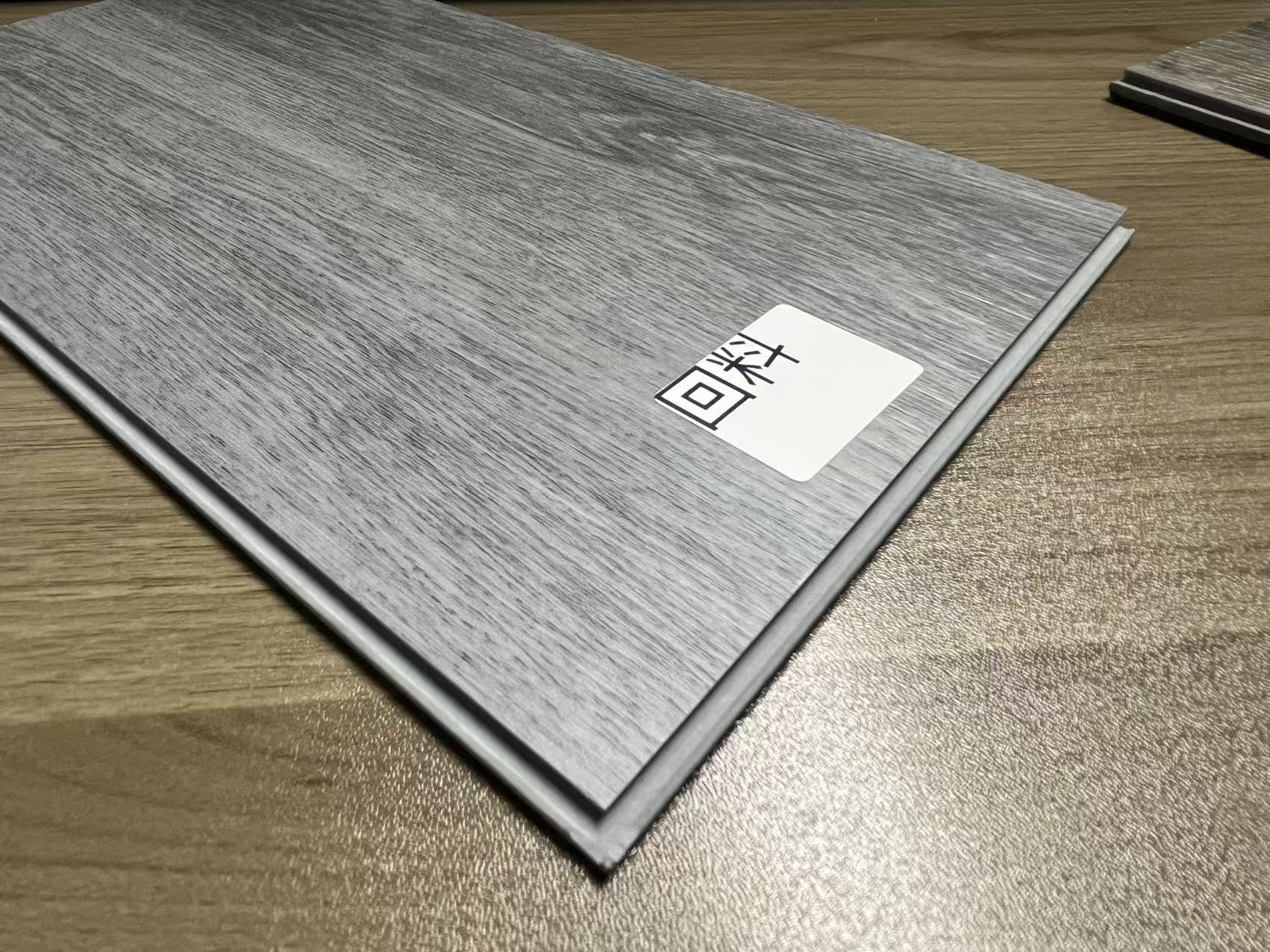
SPC stands for Stone Plastic Composite.
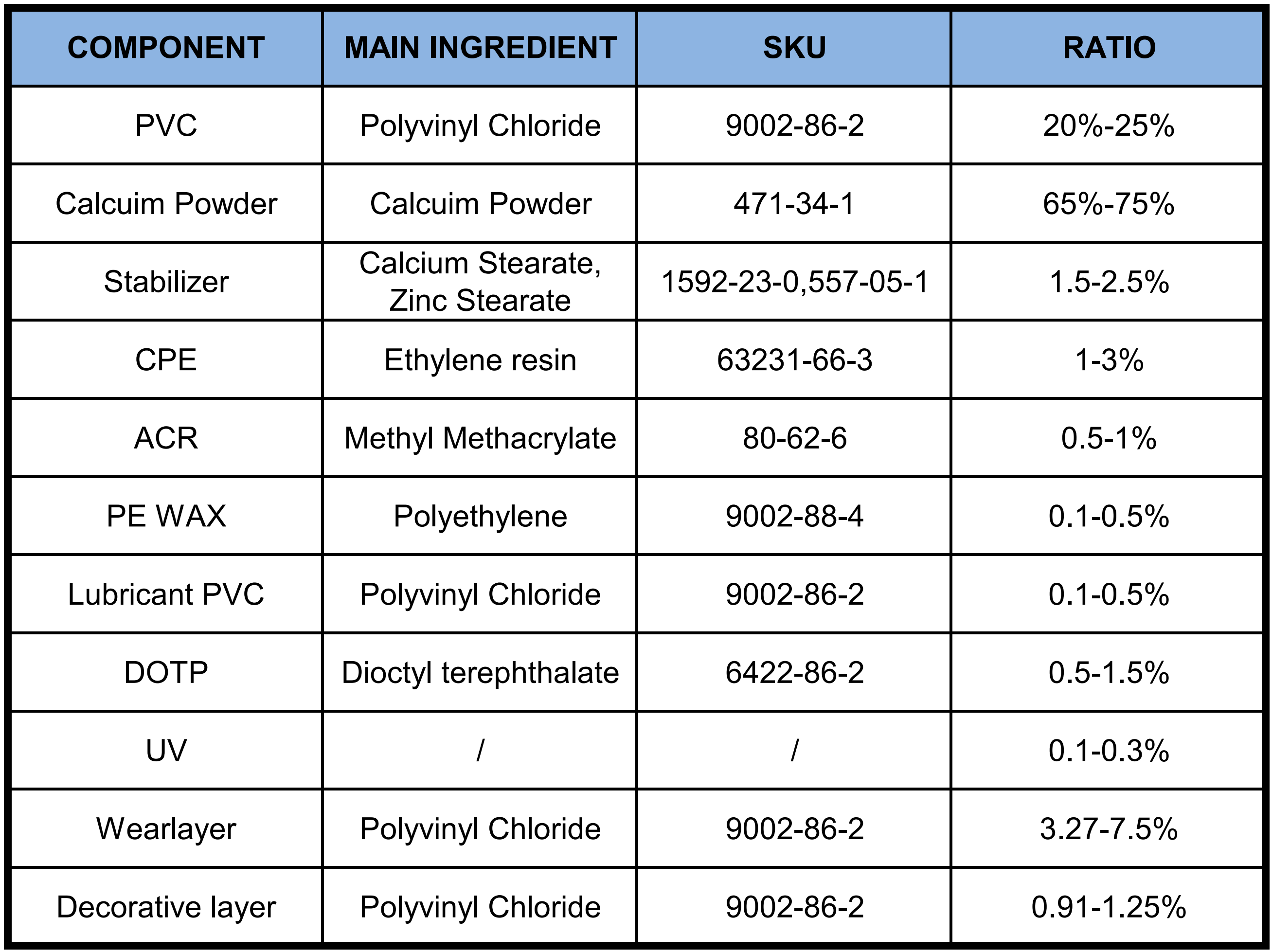
Its rigid core normally contains a large proportion of calcium carbonate combined with PVC resin and smaller quantities of stabilizers, processing aids, lubricants and other additives.
You may sometimes hear the formulation simplified as roughly three parts mineral filler to one part PVC, but this should not be treated as a universal formula. Actual formulations differ between manufacturers and products.
PVC resin is also considerably more costly than mineral filler, which creates an obvious economic reason for manufacturers to optimize material costs. Reprocessed material may therefore be incorporated into some SPC formulations.
But this brings us to an important distinction:
“Recycled material” and “poor-quality flooring” are not automatically the same thing.
The source and consistency of the recycled material, formulation, processing conditions and final product performance all matter.
So rather than judging an SPC plank simply by a label, buyers should look at what can actually be verified.
This is probably the most common piece of advice online:
Virgin SPC has a white, smooth and odorless core, while recycled SPC has a darker, rougher and stronger-smelling core.
It sounds convenient.
It is NOT a reliable rule.
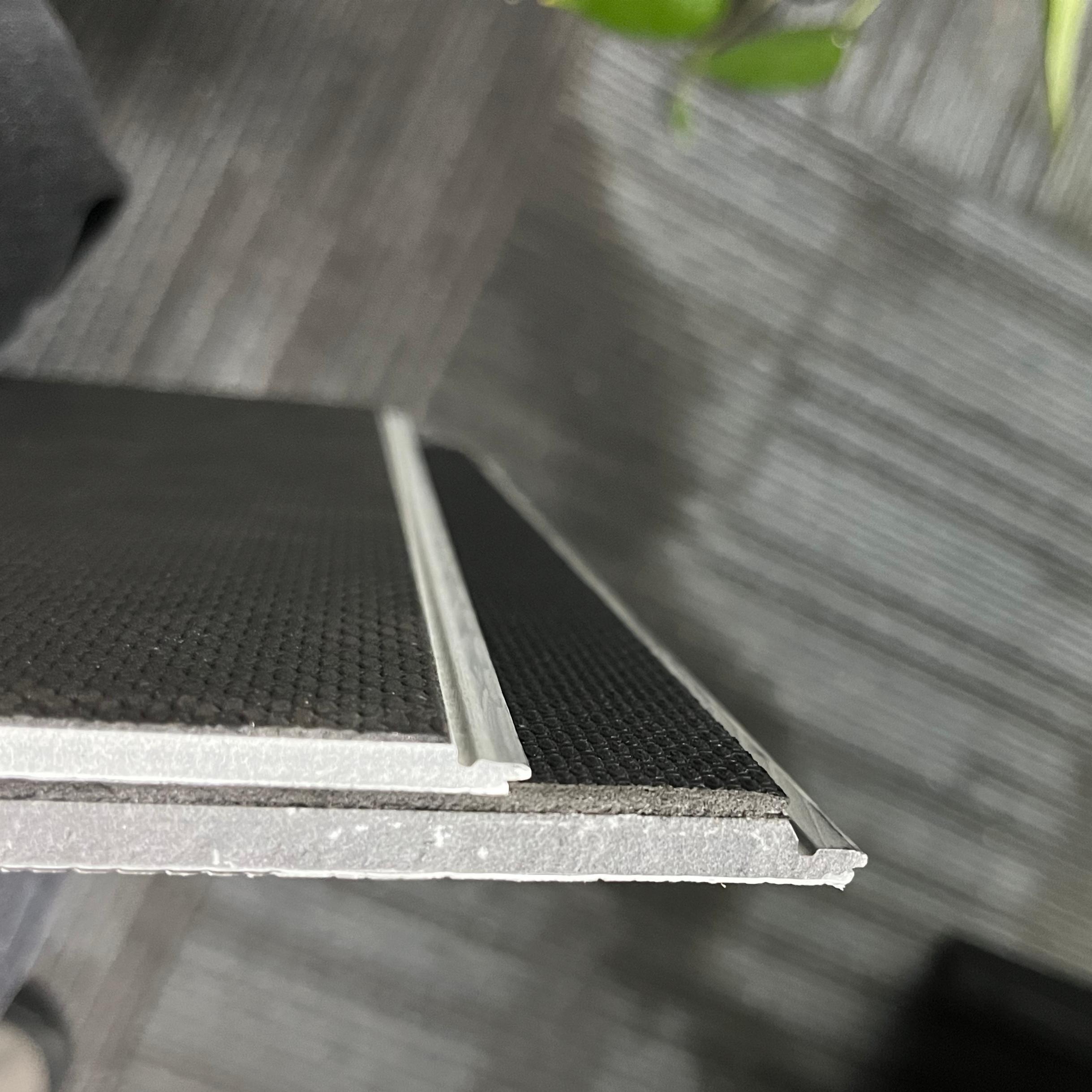
SPC core color can change with formulation, fillers, pigments and processing choices. A virgin-material core does not necessarily have to be bright white, while appearance alone cannot establish what proportion of recycled PVC has been used.
Surface smoothness and odor have similar limitations.
They may give an experienced buyer clues about manufacturing consistency, but color, smell or touch alone should not be used as proof of virgin or recycled content.
So what can you actually check?
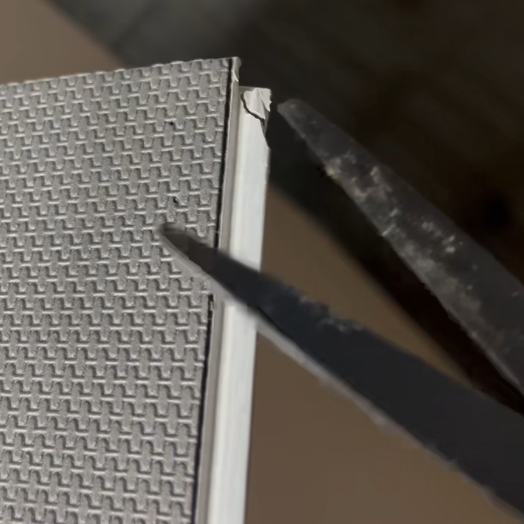
One quick factory-floor screening method is to examine the weakest and most precise part of an SPC plank: its click profile.
Try applying comparable force to the click edge and observe how easily it fractures.
A well-formulated SPC core should provide sufficient toughness for machining, transportation and installation. A brittle click that breaks unusually easily is therefore worth investigating.
But there is an important condition:
Only compare like with like.
Two planks should have comparable:
overall/core thickness;
click-system geometry;
profile dimensions;
and preferably similar product construction.
A 4 mm plank with one locking profile cannot reasonably be compared with a thicker plank using a completely different click design.
More importantly, this test tells you something about brittleness and click performance. It does not, by itself, prove whether the PVC is virgin or recycled.
Trick #2: Look at Light Transmission Through the Core
Another workshop method we sometimes use is comparing the light transmission of isolated SPC cores.
Remove the décor/wear structure and attached pad so that only the SPC core remains. Shine a strong flashlight from behind samples of equal thickness and compare the amount and distribution of light passing through them.
Differences can sometimes be observed between formulations.
However, this should again be treated as a comparative screening method rather than a universal virgin/recycled test. Pigments, filler content, core thickness and formulation can all influence optical appearance.
It becomes more useful when comparing samples of known specification under the same conditions.
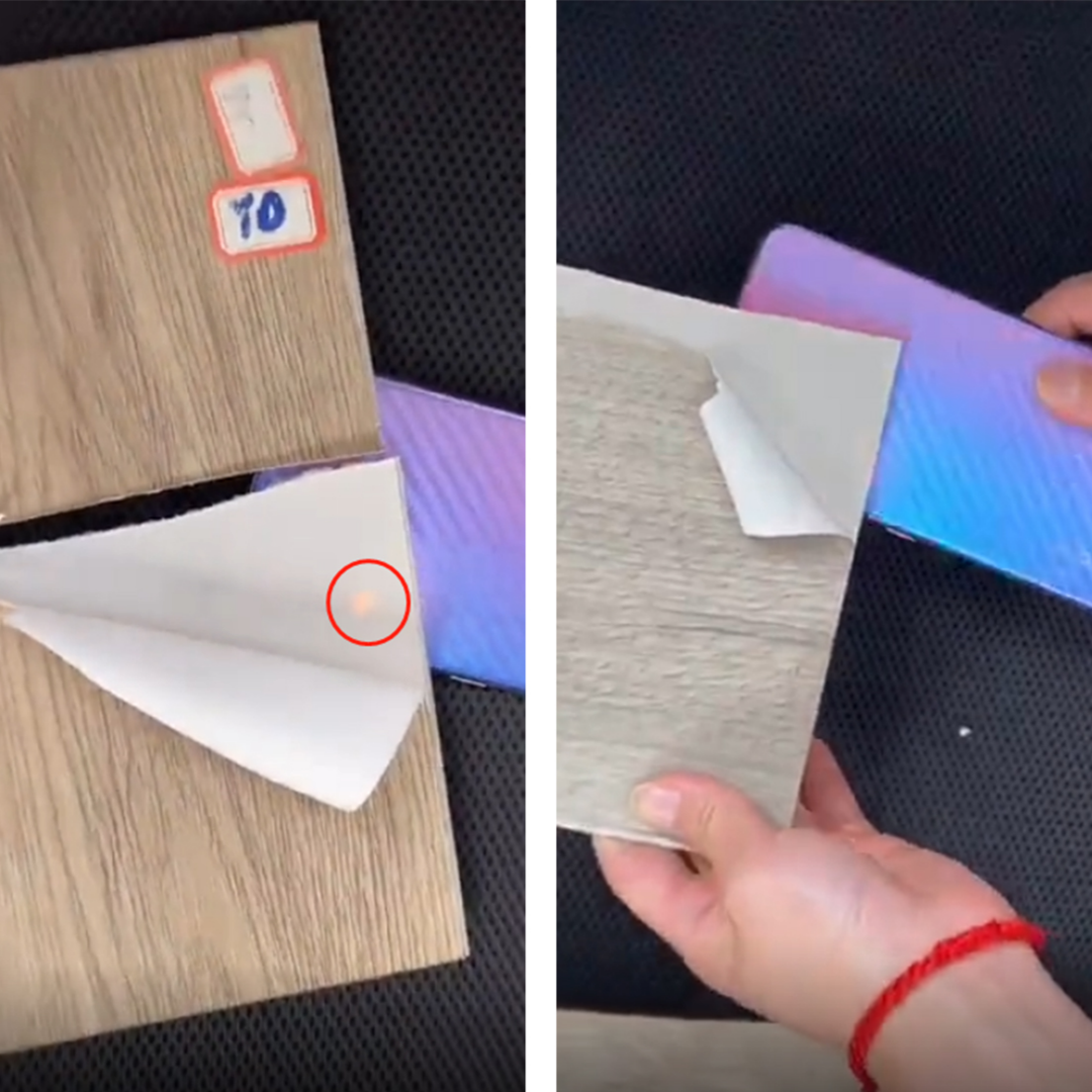
The bonding between the decorative structure and SPC substrate can provide another useful manufacturing-quality clue.
Cut the plank carefully at its edge and examine how firmly the upper layers are bonded to the core. If one product separates unusually easily, it may indicate differences in lamination or processing quality.
Strong, consistent bonding matters because delamination can become a serious flooring failure.
But once again, caution is necessary: bonding strength is not a direct chemical test for recycled PVC. Production temperature, lamination conditions and the complete formulation also influence the result.
This test is better understood as part of evaluating the overall manufacturing quality of an SPC plank.
This is where we should separate two questions:
“Does this product contain recycled PVC?”
and
“Will this SPC flooring perform properly?”
They are related questions, but they are not identical.
If virgin material content is specifically required for your order, the safest approach is supplier traceability, production control and agreed material specifications rather than relying on core color.
If your concern is actual flooring performance, testing becomes even more important.
Depending on the market and application, professional buyers can ask for relevant test reports covering matters such as:
dimensional stability;
locking strength;
impact or mechanical performance;
heat/cold cycling behavior;
delamination resistance;
and VOC/emissions compliance.
A plank that looks beautiful when you break open a sample still needs to perform after it has been installed across an entire room.
Recycled material should not automatically be described as unsafe or unusable.
Properly controlled recycled PVC can be incorporated into engineered products. The real risk appears when the recycled feedstock is unknown, inconsistent or poorly controlled, or when manufacturers change formulations simply to reduce cost without maintaining the required product performance.
That uncertainty can translate into inconsistent mechanical or thermal behavior.
For flooring applications, weak or brittle click profiles are particularly troublesome because damage may already occur during installation. Poor dimensional performance can be even more expensive, since problems may only become visible after the flooring has been installed and exposed to changing temperatures.
For distributors and project buyers, therefore, the objective should not simply be finding the “whitest core”.
It should be finding a traceable and consistently manufactured core whose performance can be verified.
There is no reliable five-second trick that proves an SPC plank uses virgin PVC simply by looking at its color or smelling its core.
Breaking the click, comparing light transmission and examining layer bonding can all provide useful clues when samples are tested under comparable conditions. But none of these should replace proper specifications, factory control and performance testing.
If your project specifically requires virgin-material SPC, make that requirement clear before production and verify it through your supplier's material-control system.
And whether you choose virgin or controlled recycled material, judge the finished flooring by what ultimately matters:
Does the core remain stable?
Does the click perform?
Are the layers properly bonded?
And can the supplier provide evidence that the flooring meets the performance and emissions requirements of your market?
That is a much safer way to buy SPC flooring than simply asking whether the core looks white.


