
Views: 0 Author: Site Editor Publish Time: 2026-06-18 Origin: Site


As the Dragon Boat Festival comes near each year, people across many Asian countries begin to feel a familiar change in the weather:
Temperatures rise. Rain becomes more frequent. Humidity levels climb.
In regions such as Southern China, Malaysia, Vietnam, Indonesia, Thailand, and other parts of Southeast Asia, the hot and damp season can be particularly challenging—not only for people, but also for building materials.
For many households, this is the time when flooring problems start to appear.
Flooring may develop gaps, become uneven, expand near walls, or in severe cases, show visible bending and deformation. While such issues are often blamed on installation, the flooring material itself plays an equally important role.
This is why flooring manufacturers, distributors, and project developers pay close attention to a number of technical parameters before selecting products for humid environments.
Let's take a look at several of the most important ones.
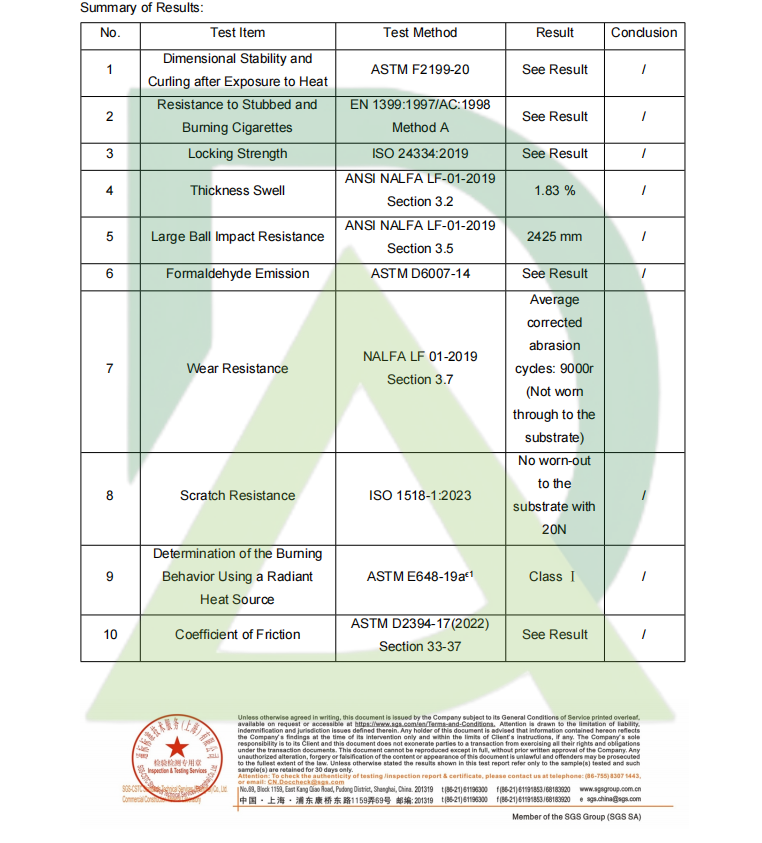
For laminate flooring, density is one of the most fundamental indicators of quality.
Simply put, density reflects how tightly the wood fibers inside the core board are compressed together during production.
A higher-density core generally provides:
Better structural strength
Improved screw-holding and click-lock performance
Better resistance against daily impact
More stable dimensions during environmental changes
Density alone does not determine whether a floor is waterproof, but it often influences how the flooring reacts when exposed to moisture over time.
For this reason, density is often one of the first parameters reviewed when evaluating laminate flooring intended for humid regions.
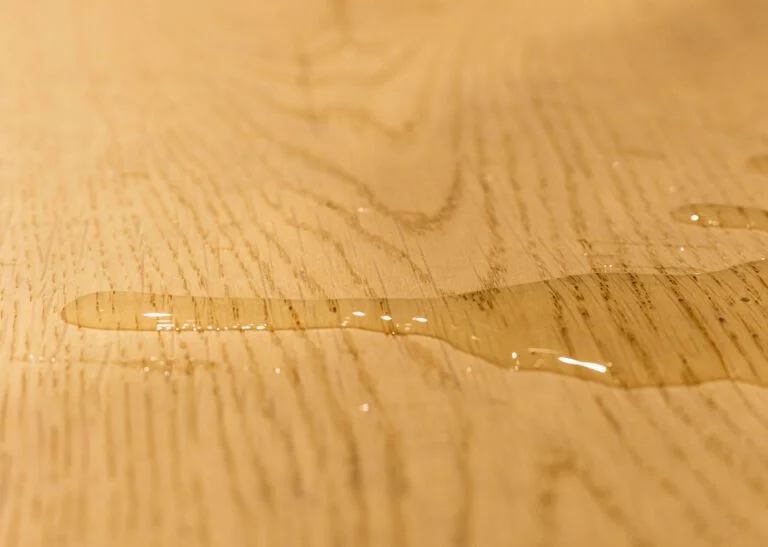
Many people focus on whether water can remain on the flooring surface.
Manufacturers often focus on a different question:
What happens if water reaches the core?
This is where thickness swell becomes important.
Thickness swell, sometimes referred to as water swelling, measures how much a flooring plank increases in thickness after being exposed to water for a specified period, commonly 24 hours.
A typical laboratory test involves:
Measuring the original thickness of the plank
Immersing the sample in water for 24 hours
Measuring the thickness again afterward
Calculating the percentage increase
The lower the thickness swell value, the better the flooring core resists moisture penetration.
This test simulates situations such as:
Spilled water left unattended
Moisture migrating from the subfloor
Water entering through joints or damaged edges
Long-term exposure to high humidity
Even if a flooring surface appears waterproof, excessive thickness swelling may eventually lead to edge lifting, joint stress, or visible deformation.
This is why professional buyers often examine thickness swell values instead of relying solely on marketing descriptions.
Temperature and humidity do not only affect thickness.
They can also affect the overall dimensions of a flooring plank.
Dimensional stability describes how much a flooring product expands or contracts when environmental conditions change.
This parameter becomes especially important in regions where flooring experiences:
Seasonal humidity fluctuations
Strong sunlight exposure
Air-conditioned indoor environments
Significant temperature differences between day and night
A flooring product with good dimensional stability maintains its original dimensions more effectively when conditions change.
This helps reduce the risk of:
Joint separation
Edge pressure
Installation stress
Surface irregularities
For floating flooring systems, dimensional stability directly influences long-term installation performance.
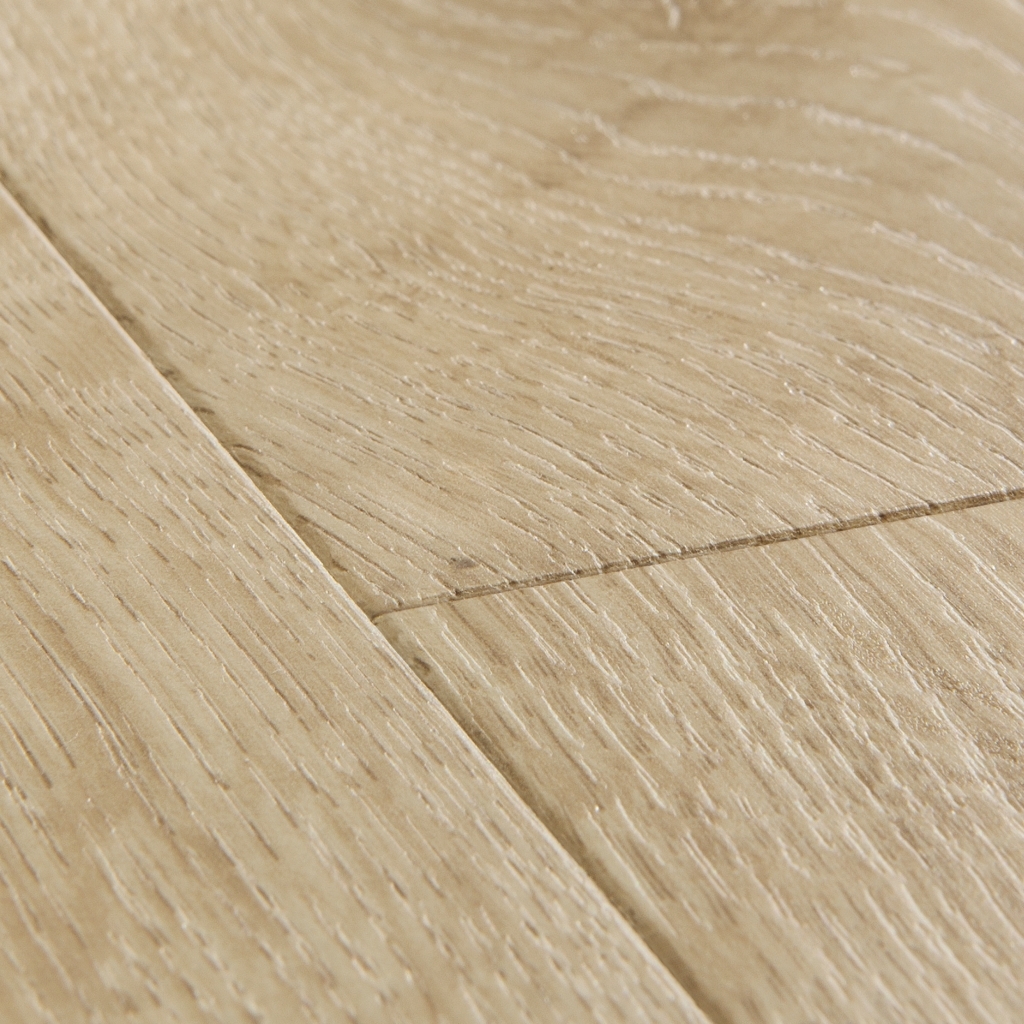
While dimensional stability measures size change, other parameters evaluate the shape of the flooring itself.
These include:
Curl refers to the tendency of a plank's edges to rise or fall relative to its center.
Excessive curl may create uneven joints or visible surface irregularities after installation.
These measurements help evaluate how a flooring plank reacts when subjected to force or environmental stress.
The acceptable range varies depending on the flooring category.
For example:
Laminate flooring generally requires rigidity and structural strength.
LVT flooring naturally allows more flexibility.
SPC flooring aims to balance rigidity with dimensional stability.
Squareness measures whether the plank remains perfectly rectangular.
Even minor deviations can affect installation quality and cause alignment issues across larger flooring layouts.
Although consumers rarely hear about these parameters, installers and quality control teams pay close attention to them because they directly influence installation accuracy.
Many flooring failures do not occur immediately after installation.
Instead, they appear months later when the flooring experiences real environmental conditions.
During humid seasons, flooring may absorb moisture from:
Indoor humidity
Open windows
Rainy weather
Concrete subfloors
Condensation
If the flooring core lacks sufficient stability, the result may be:
Expansion
Contraction
Edge lifting
Bending
Joint stress
This is particularly relevant in tropical and coastal regions where high humidity remains present throughout much of the year.
In some Middle Eastern markets, flooring faces a different challenge: extreme temperature changes. While moisture may be less severe, large temperature fluctuations can still affect dimensional performance.
The underlying principle remains the same: a stable flooring core matters just as much as a waterproof surface.
Today, many flooring products are marketed as waterproof.
While waterproof surfaces are undoubtedly important, long-term flooring performance depends on more than surface protection alone.
The durability of the core, resistance to swelling, dimensional stability, and resistance to bending all contribute to how a floor performs over years of use.
Whether evaluating laminate flooring, SPC flooring, or LVT flooring, buyers should consider not only how the product looks on the showroom floor, but also how it will behave during the hottest, dampest, or most challenging months of the year.
After all, the true test of a flooring product begins after installation—not before.


